How ADA Global teams made AI part of daily work
We ran nine programmes for more than 450 staff. A survey in July 2026 shows what people still do.
"AI has reduced the time I spend on repetitive tasks and improved my productivity. It also helps me create clear and professional communication more quickly."
What the survey found
25 of 34
staff surveyed use AI for work every day
97%
say that their work quality is better
88%
save at least 30 minutes each week
Every session ended with its own feedback form. This survey is a different test. We sent it in July 2026, and only to the people who attended in person, to find out whether they still used AI. 34 answered. Every answer is self-reported, and we show the weak results next to the strong ones.
What happened
The problem
Many ADA teams already used AI before our first session. Each team had found its own way to use it, and there was no shared method between teams.
What we did
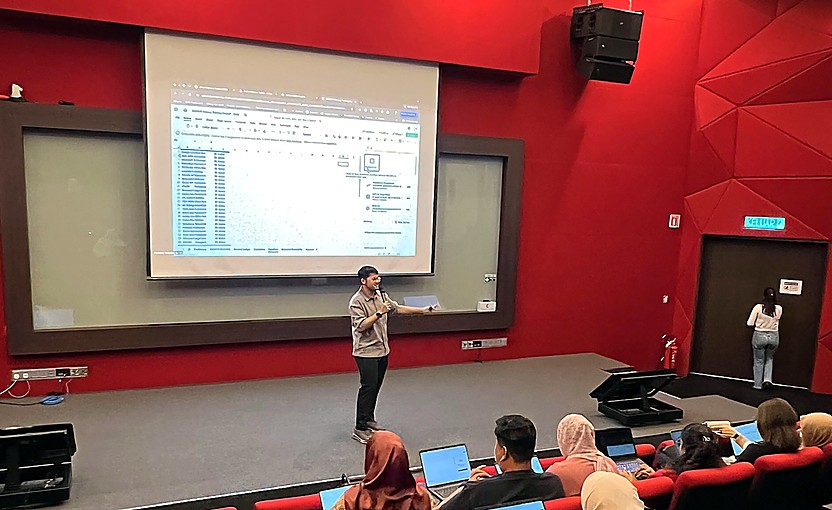
We ran nine programmes, one team at a time. We built each programme for the work of that team, so content, pre-sales, legal, IT and finance each had their own version.
The result
Staff rated their own AI skill at 3.1 out of 5 before the training and 4.0 after it, across six areas. 25 of 34 staff surveyed use AI for work every day. They credit about half of the time saving to the training, and we report that split.
- Industry
- Data and AI
- Offices
- Global
- Trained
- More than 450 staff, 9 programmes
One task for each person, before and now
- Summary of long email threadsFinance team30 to 60 min5 min
- Weekly brand reviewe-Commerce team3 days2 hours
- Cleanup of vendor data columnsFinance teamA whole dayUnder an hour
- Document reviewInternal Audit team30 to 60 min5 min
- Research across sourcesFoysal Ahmed, Client Success30 to 45 min10 to 15 min
- First drafts of UX flowsPoonam Shetiya, UI/UX2 to 3 hours30 to 45 min
Their own words and numbers. Everyone here gave written permission to be quoted, by name or at team level.
Three things we learned
Train the real work, not the tool
We built every programme for one team's role, not as a general tool demonstration. The survey shows the habit was still there months later.
Personal change comes first
Staff rated their own change high. The statement "my colleagues noticed" scored lowest. A small visible change does not mean the training failed.
Train every team, not one group
Nine programmes reached nine teams. The method went across the company instead of sitting with one central group of experts. Our AI adoption journey plans that team-by-team order for your company.
A demo does not change how people work.
Start with one team and one day.
Book a one-day AI training course for one team, or plan every team through our AI adoption journey. We measure it in the same way, and we send you the same numbers. Every course is HRD Corp claimable.